
The Huelva City Council signs an agreement to boost the social and solidarity economy
Topics Archivo Municipal de Huelva
The Huelva City Council and three social economy organisations have signed an agreement to promote collective entrepreneurship, socio-labour integration and quality employment in the city. The agreement includes training, awareness-raising and a monitoring committee.
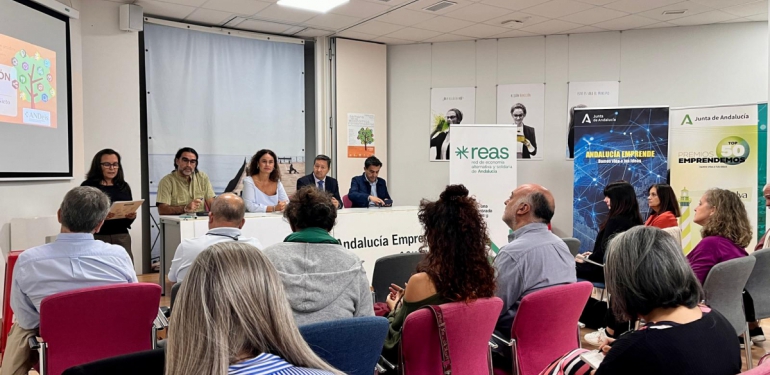
The Huelva City Council has signed an agreement with Más Cooperativas-FAECTA, the Fundación Escuela Andaluza de Economía Social and REAS Andalucía to promote the social and solidarity economy in the city. The agreement was closed this Tuesday, October 20, during the Week of Transformative Economies, at an event focused on collaboration with public administrations and on responsible public procurement.
What the agreement includes
The agreement provides for awareness-raising, training and knowledge-exchange actions, as well as the development of initiatives of common interest. It also sets out lines of work in collective entrepreneurship, social innovation, sustainable local development, socio-labour integration, quality employment and the creation of cooperation networks. To coordinate all of this, a monitoring committee will be created to assess how the actions progress.
Public procurement as a route to employment
A good part of the event was devoted to responsible public procurement. The president of ANDEIS, Javier Granja, explained that incorporating social criteria into contracts can benefit both public administrations and people with the greatest difficulties in accessing employment. He mentioned tools such as reserved contracts and social clauses, which facilitate the participation of insertion companies.
The subsequent round table included representatives of industrial laundry, energy efficiency, waste management and socio-labour integration initiatives. The manager of Traperos Caracol, F. Javier Rodríguez, pointed out the difficulties insertion companies face in accessing waste management contracts. The manager of Inserta Cádiz, Sebastián Gómez, explained how the analysis of the real costs of a textile waste service in the Bay of Cádiz revealed problems of economic viability.
The organisations involved
The deputy mayor for Social Services, Family, Employment, Housing, Economic Development and European Funds, Adela de Mora, reiterated the municipal support for the social economy and encouraged organisations and public administrations to work together. The regional president of Más Cooperativas-FAECTA, Pedro Oliveira, stressed the importance of collaboration between cooperatives and public administrations. The director-manager of the Fundación Escuela Andaluza de Economía Social, José Ariza, focused on territorial inequalities, and the president of REAS Andalucía, Francisco J. González, highlighted the work of organisations that place people and the territory at the centre of their activity.