
Thousands of schoolchildren from Huelva visit the venues of the Film Festival
Topics Festival de Cine Iberoamericano de Huelva
The event opens Primera Pantalla with seven films for different ages and takes short films to two centres in the capital.
ElOnubense newsroom ·
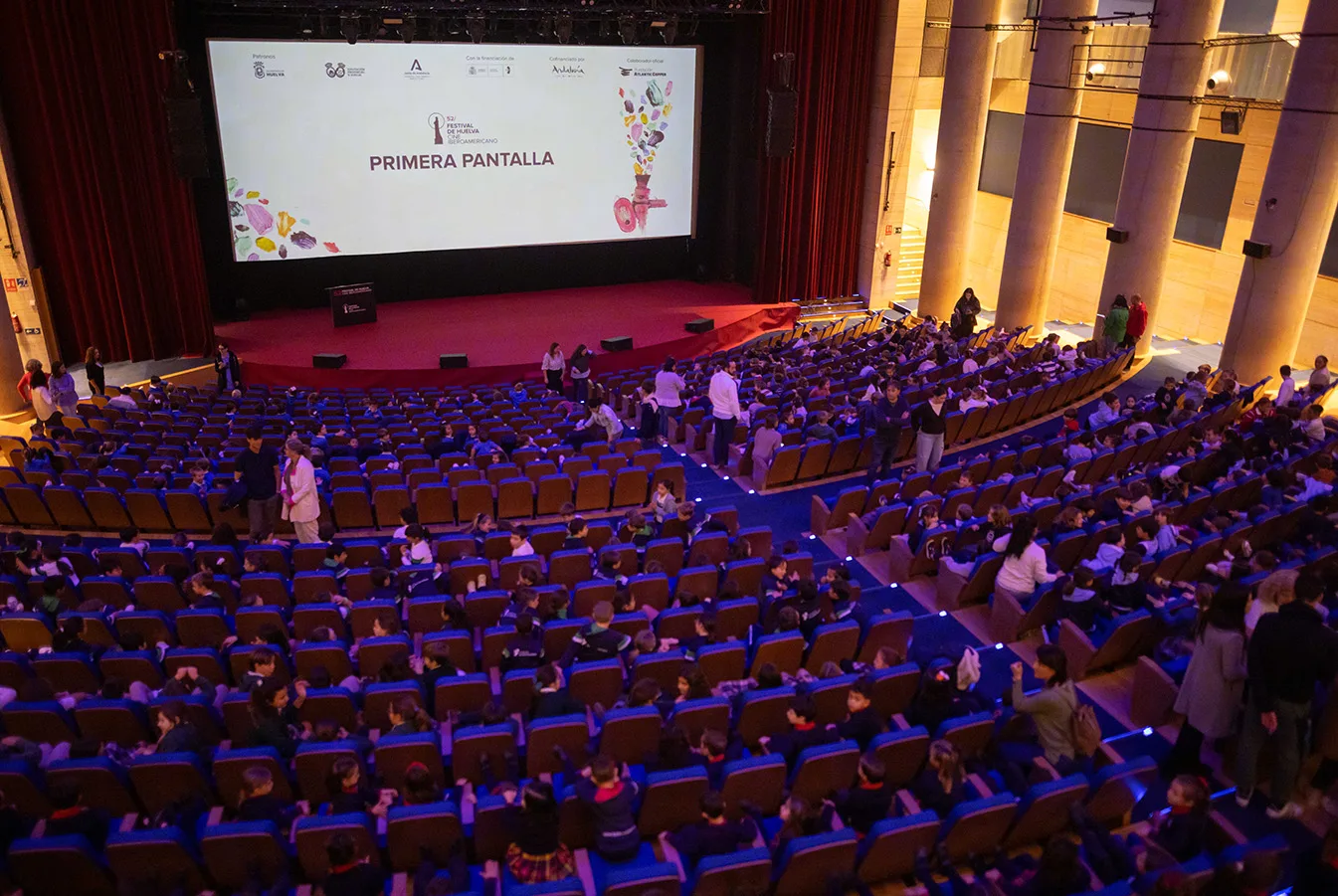
The venues of the Huelva Ibero-American Film Festival begin this Monday to welcome schoolchildren from the capital and the province. It is Primera Pantalla, the educational section that during the 52nd edition of the event will bring together thousands of students, as detailed by the organization.
The Department of Educational and Development Activities has chosen seven films from Spain, France, Italy, Mexico and Belgium: five animated and two fiction, designed for different ages and educational stages. The idea is for the conversation to continue in class. The films open up topics such as friendship, bullying, social inequalities, caring for the environment or the value of reading.
The list is made up of «Arco», by Ugo Bienvenu; «El chico de los pantalones rosa», by Margherita Ferri; «El tesoro de Barracuda», by Adrián García; «La luz de Aisha», by Shadi Adib; «Olivia y el terremoto invisible», by Irene Iborra; «Rescate congelado. Una película de huevos», by Gabriel Riva Palacio and Rodolfo Riva Palacio; and «Un pequeño mundo», by Laura Wandel.
Short films in the classroom
Cinema has also entered two schools in the capital this Monday with the Cine y Valores series. The students of the Escuela de Arte León Ortega have seen «Inquilinos», by Adrián Ordóñez, and those of IES Pablo Neruda, «Tiempo prestado», by Paco Ortiz. The sessions are held with the Academia de Cine de Andalucía and combine the screening with a discussion in which the students ask questions to those who have made the films.
With the Asociación Andaluza de Mujeres de los Medios Audiovisuales (AAMMA), the Festival has scheduled four other short films: «No pisar», by Rocío Sepúlveda; «Quejío de loba», by Andrea Ganfornina; «Tiempo y perdón», by Teresa Trasancos; and «Tsunami», by María Pulido. They address the loss of identity of neighborhoods, inherited violence, family traumas and the consequences of climate change.
University students also have their place. In the fifth edition of Jóvenes Cinéfilos Comunicadores, a group of students is in charge of the informative coverage of the event under the tutoring of the critic Carlos Loureda, member of the Academia de Cine Europeo and the Asociación de Informadores Cinematográficos de España. The initiative is aimed at those studying Cinema, Audiovisuals, Journalism and Cultural Management.
Breaking news from News, on your phone
An alert only when something can't wait. Free, no account needed.
On iPhone, alerts only arrive if you first add ElOnubense to your Home Screen. How to do it, step by step
This browser can't receive alerts. Try another one, such as Chrome or Safari.
You've blocked alerts from ElOnubense in this browser. You can turn them back on in its settings. How to do it, step by step
Only what can't wait. Change or remove it in my alerts
Shall we let you know what matters?
Phone alerts
On iPhone, alerts only arrive if you first add ElOnubense to your Home Screen. How to do it, step by step
This browser can't receive alerts. Try another one, such as Chrome or Safari.
You've blocked alerts from ElOnubense in this browser. You can turn them back on in its settings. How to do it, step by step