
Cris Tapia presents 'Las flores de Julia' in Huelva
Topics Festival de Cine Iberoamericano de Huelva
The director and the actresses Mariana Genesio and Paulina García present a co-production from Argentina and Chile competing for the Colón de Oro.
ElOnubense newsroom ·
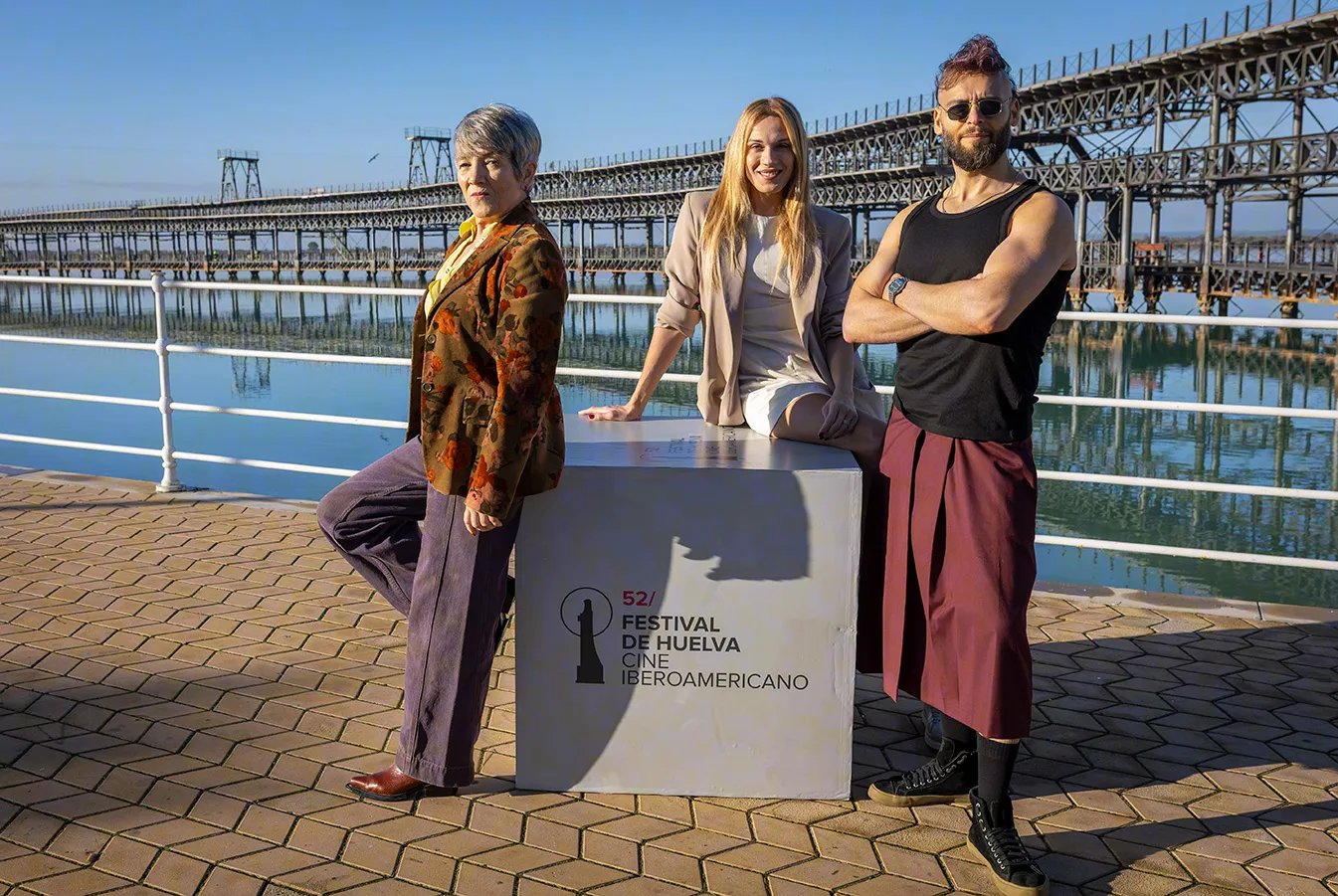
A daughter returns to her hometown twenty years after fleeing it. She does so after the death of her brother and finds a seriously ill mother who does not recognize her and who refuses to undergo surgery. That is the starting point of 'Las flores de Julia', the film that Cris Tapia presented this Monday at the Festival de Huelva de Cine Iberoamericano alongside the actresses Mariana Genesio and Paulina García.
The story takes place in the Argentine province of Mendoza. Julia returned to the place she left when she was still Álvaro. Mother and daughter are forced to live together in an uncomfortable and tense closeness, and from there a fragile bond emerges. In that reunion, the protagonist faces questions of identity, memory and the limits of love.
The film is part of the Official Competition Section of the 52nd edition of the event and had its world premiere in Huelva on Sunday, November 15. Paulina García, who won the Silver Bear for Best Actress at the Berlin Festival for 'Gloria', plays the mother.
A personal look
Tapia explained that the film was born from his desire to explore his own family ties. «One makes a film to explore, to grow, to expand», said the director, who said that the project helped him investigate his relationship with his father and his grandmother. He also acknowledged that the team had to work to shed the prejudices associated with a story starring a trans woman.
Genesio explained that the construction of her character was marked by conversations about the contradictions between mother and daughter: how a mother faces the fact that her daughter is a trans woman and how a daughter experiences the rejection of a mother who threw her out of the house. «Embracing contradictions», summarized the actress.
Genesio also defended a representation of transexuality far from approaches that turn this reality into the sole axis of the narrative. «Trans people inhabit common, everyday places, that is what is militant and revolutionary», she stated.
Before arriving in Huelva, 'Las flores de Julia' was selected in the Work In Progress of the Festival de Cine de Viña del Mar and in the MAFIZ of the Festival de Málaga. It now competes for the Colón de Oro of the onubense event.
Breaking news from News, on your phone
An alert only when something can't wait. Free, no account needed.
On iPhone, alerts only arrive if you first add ElOnubense to your Home Screen. How to do it, step by step
This browser can't receive alerts. Try another one, such as Chrome or Safari.
You've blocked alerts from ElOnubense in this browser. You can turn them back on in its settings. How to do it, step by step
Only what can't wait. Change or remove it in my alerts
Shall we let you know what matters?
Phone alerts
On iPhone, alerts only arrive if you first add ElOnubense to your Home Screen. How to do it, step by step
This browser can't receive alerts. Try another one, such as Chrome or Safari.
You've blocked alerts from ElOnubense in this browser. You can turn them back on in its settings. How to do it, step by step